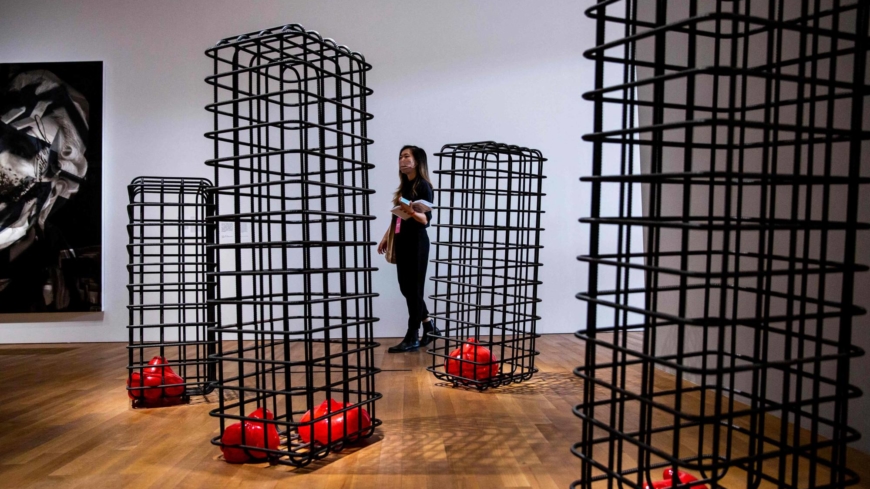
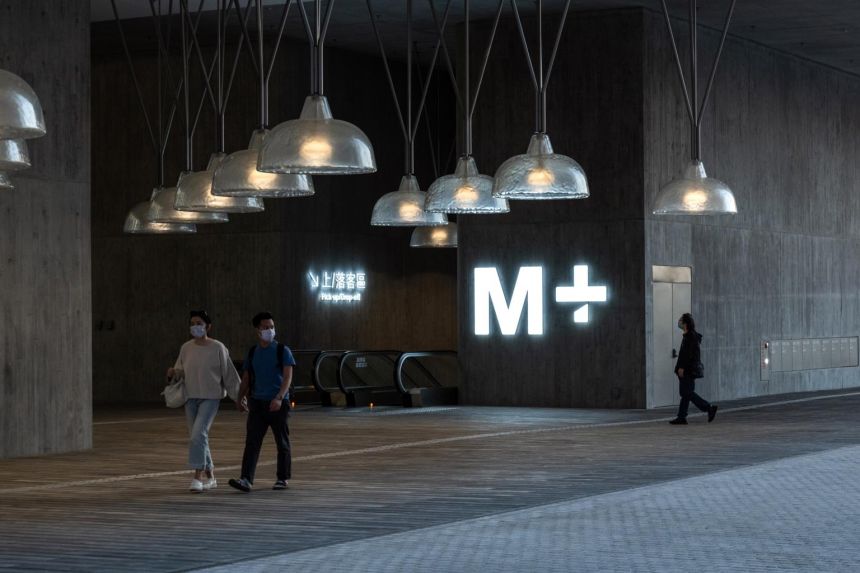
A senior Hong Kong cultural official said on Thursday (November 11) that freedom of expression was not above a China-imposed national security law, during a preview ahead of the opening of a contemporary art museum intended to put the city on the global cultural map.
The multi-billion dollar M+, featuring contemporary artwork from leading Chinese, Asian and Western artists is Hong Kong's bid to match museums like the Tate Modern in London, the MoMA in New York and the Centre Pompidou in Paris.
But the imposition of a sweeping national security law by China last year on its once freest city is casting a pall over the opening, as curators and artists struggle to find a balance between artistic expression and political censorship.
Earlier this year, pro-Beijing politicians and media outlets criticised certain works in the M+ for breaching the national security law and inciting "hatred" against China, including a photograph by Chinese dissident artist Ai Weiwei, giving the middle finger in Beijing's Tiananmen Square.
"The opening of M+ does not mean that artistic expression is above the law. It is not," Henry Tang, the head of the West Kowloon Cultural District, a new cultural hub that includes the M+, told reporters.
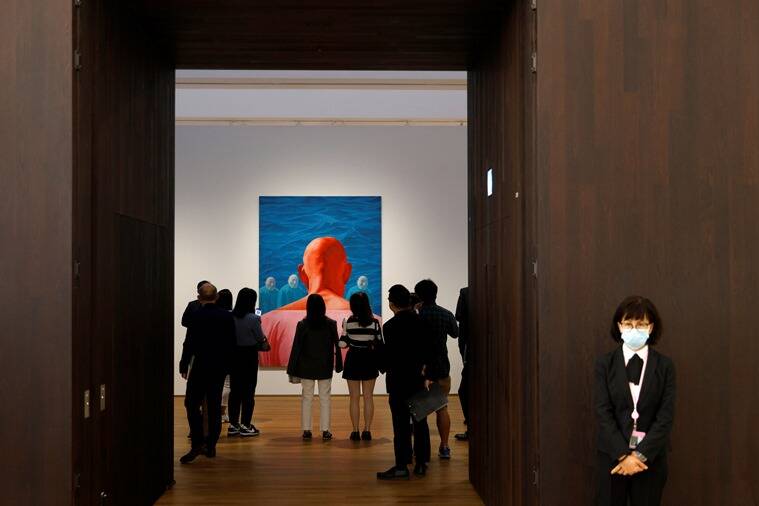
Tang stressed all exhibits must "comply" with the national security law and that certain works in their collection, including Ai's contested photograph, wouldn't be displayed.
The M+ museum's collection includes paintings, ceramics, videos and installations from artists like China's Zhang Xiaogang and Britain's Antony Gormley. A piece by Wang Xingwei of a man in Beijing pedalling a bicycle cart laden with two dead penguins, has echoes of the Tiananmen killings in 1989.
One of Ai's installations, "Whitewash", is also on display, featuring ancient Chinese earthenware jars.
Despite this, Ai remained critical.
"The museum is clearly under censorship," Ai told Reuters from Cambridge where he's now based. "When you have a museum which cannot or is incapable of defending its own integrity about freedom of speech, then that raises a question. And certainly the museum cannot perform well in terms of contemporary culture."
Source: Reuters