
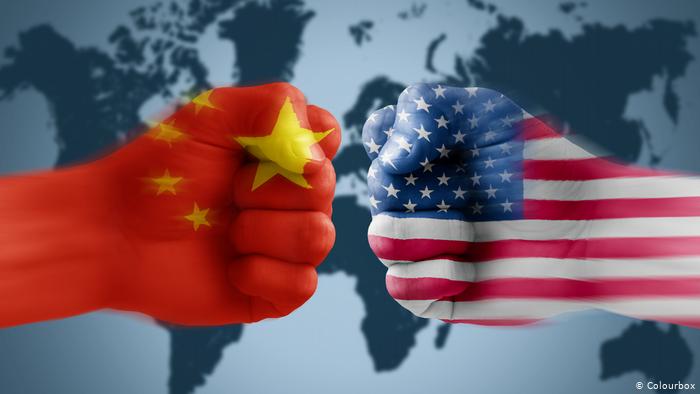
The United States has emerged as the world superpower since the end of World War II, it constructed the global liberal international order along with the other superpowers, Soviet Union, China, France, and the United Kingdom. The US reached its peak after the end of the Cold War by becoming the world hegemon. Though it is short-lived due to the rise of the new powers particularly China, the rise of China presents a greater challenge to the US as it hopes to replace the new international order.
The Trump administration undermined the US influence on the world arena as it unilaterally retreated to protectionism by withdrawing from the Paris Climate Accord, Trans-pacific partnership, and waging a trade war with China and Europe. Trump criticized the US allies that they are free-riding on the US effort for their national security and economic interest. Despite the assurance from the new US administration, Joe Biden that “America is back”, it would not do much to restore the damaged relationship with its allies as they would assume that the US foreign policy may be changed according to the elected-president.

The self-inflicted foreign policy initiated by the Trump administration for four years has given China the opportunities to strengthen its economics and military influence globally. China has spread its influence in Asia, Europe, Africa, and the Middle East through trade and foreign assistance. For instance, in 2020 China has challenged the US to become the EU’s largest trading partner. This has been made possible due to the ratification of the long-negotiated investment deal between the European Union and China which makes it easier for the investors from Europe to get access to the Chinese market. The covid-19 pandemic also helps to strengthen this trade relation. The quick recovery from the Covid-19 pandemic has driven the demand for the European Product, especially automobile and luxuries while the demand for Chinese medical equipment and electronics has surged in Europe.
The capital riot on January 2, 2021, before the inauguration’s day of the Biden presidency has also undermined the US soft power. The US has been regarded as the global superpower which human rights and democracy have been the means for its influence on the international arena. Democracy and humans have been the pretext for the US to interfere militarily and politically in Syria and Iraq. However, the recent crackdown in the US capital implies that the US can’t solve its domestic issues and yet always try to push for democratically improvement in other countries particularly in Asia.

The decline of the US soft power coupled with the decreasing of its economic capabilities and alliance credibility has paved the ways for China to fill the vacuums. Though in the status quo China still lacks behind the US in the sphere of economics and military capabilities, there is little doubt that China would be able to catch up with the US by becoming the world’s largest economy and be able to develop sophisticated and modern technology weapons by 2030. However, it’s still questionable whether China will be able to a complete and formidable superpower as the US has done for decades.
Having military and economic power is not sufficient for a state to become the global hegemon, it is essential to have soft power to win the hard and mind of the population and other countries. Soft power has been a major problem for the Chinese government domestically and internationally as it frequently opted for stick rather than carrot. Internationally, China is also surrounded by enemies such as Japan, South Korea, Vietnam, and India who frequently have a territorial conflict with China. Russia is the only Chinese ally left from the Cold whose friendship has been described as “best friend” by Moscow’s leader are all about keeping up the appearances. As China is a communist party-led country, it is domestically facing the threat from the demand for more freedom from its populations and other ethnic minorities within the countries. The evidence from the riot the Tiananmen Square in 1991 and Hong Kong in 2019 shown that national consolidation remains a problem in China. Despite the ongoing crackdown and sending of minorities to a reeducation camp, it has not done much to enhance China’s identity and soft power. It only alerts more concerns on human rights and democracy.

Analyst: លោក រ៉ឹម សុខវី
Image source: DW